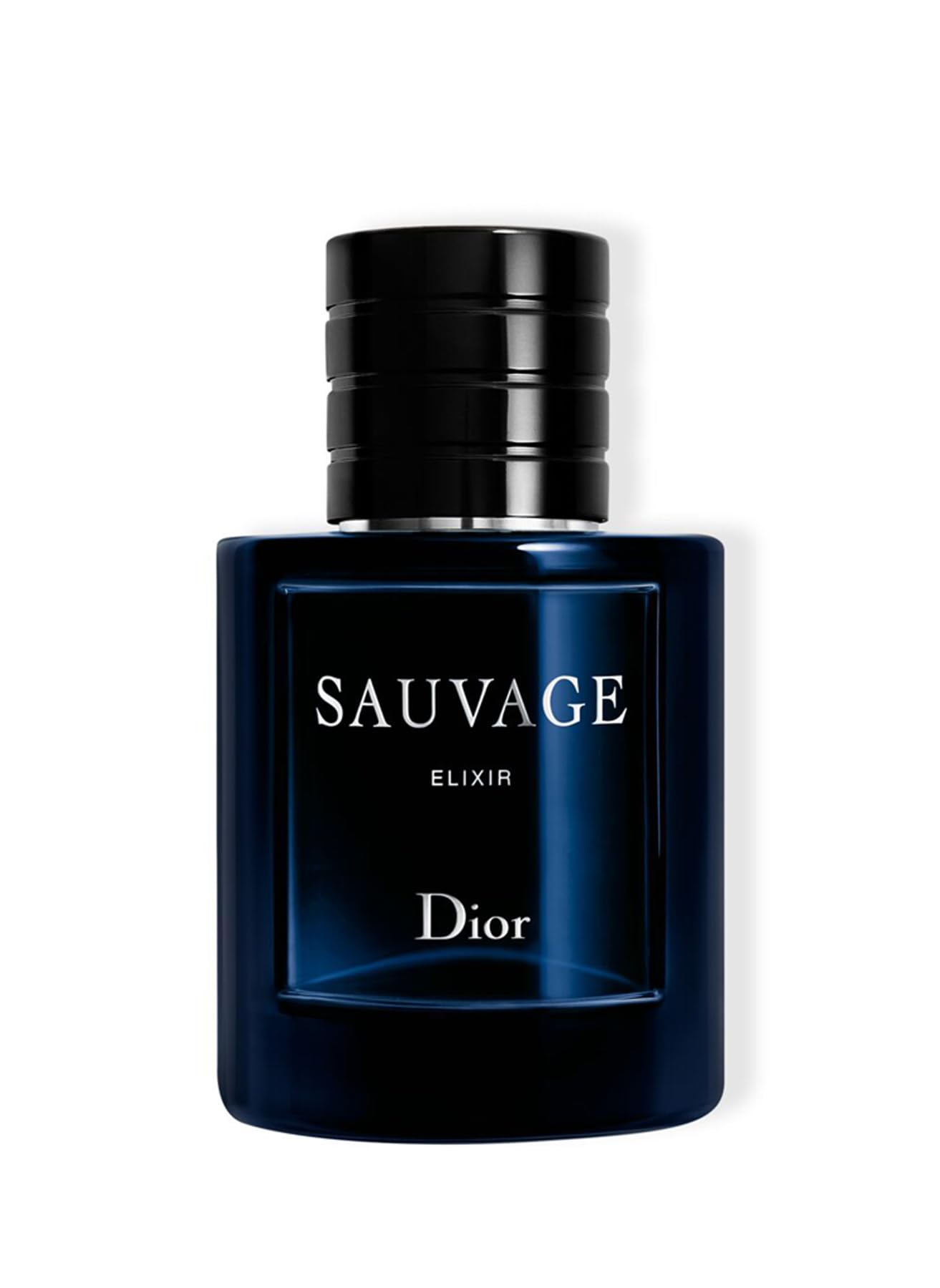
The best Dior Sauvage Elixir dupe we've scored is Al Haramain Azlan Oud Bleu Edition — rated "Spot-on" at 8/10 accuracy and 9/10 longevity (Community-tested, 20 mentions), about $56–$94 versus $265 (100ml) for the original. We list 5 Dior Sauvage Elixir dupes; all of them have a score. Accuracy and longevity are scored separately and never averaged.
What Sauvage Elixir smells like
Dior Sauvage Elixir is not a flanker in the softened, office-safe sense. Where the original Sauvage EDT leans clean and ozonic and the EDP pushes bergamot-pepper toward modern cologne territory, the Elixir is a deliberate hard pivot: dark, resinous, loud, and concentrated enough to register as a different fragrance entirely. The shared DNA is there if you're looking — the same angular, masculine character — but the Elixir plays in a different register.
The opening lands immediately with grapefruit, but unlike the fresh citrus intro on the EDT, this one burns off within ten minutes and hands the fragrance over to spice. Cinnamon and cardamom arrive together in a dense, almost medicinal accord that fills the air around you — not in a soft, apple-pie-cinnamon way, but sharp, almost abrasive, with an assertiveness that makes the projection in the first hour genuinely aggressive. This is not a subtle fragrance. If you're wearing it, the people nearest to you know it.
The heart settles into the amber and sandalwood combination that anchors the Elixir's mid-phase. The sandalwood is warm and faintly creamy, the amber rich and resinous — together they provide a wall of heat that the vetiver cuts through from beneath. The vetiver is the grounding element that prevents Sauvage Elixir from tipping into full-sweet gourmand territory; it contributes an earthy, slightly smoky bite that keeps the fragrance on the right side of dark without going barbershop or stale.
By hour three, projection has dropped to a close-skin halo, but the scent trail is persistent. The dry-down is long, warm, and unmistakable — once you've smelled Sauvage Elixir on fabric or skin, you recognize the accord on the second encounter. That's a $265 bottle doing its job.
At $265, Sauvage Elixir sits meaningfully above the EDP ($173) and EDT ($142). It's one of Dior's most expensive Sauvages, and it earns that positioning in terms of concentration and staying power. The question is whether the price premium over the dupes is worth it for your use case — and the Elixir's specific accord is unusual enough that several of the dupes have landed remarkably close.
Sauvage Elixir notes pyramid
- Top notes: grapefruit, cinnamon, cardamom
- Base notes: sandalwood, vetiver, amber
The pyramid is unusually spare for a $265 fragrance — six notes total, no heart notes listed officially. What this means in practice is that the transition from top to base is fast and the dry-down character is established early. The spice-amber-vetiver core takes over within 20 minutes and stays there. Dupes that get the cinnamon-cardamom-amber triad right tend to score well in accuracy; the vetiver is where the fidelity gap most often shows.
Dior Sauvage Elixir dupes compared
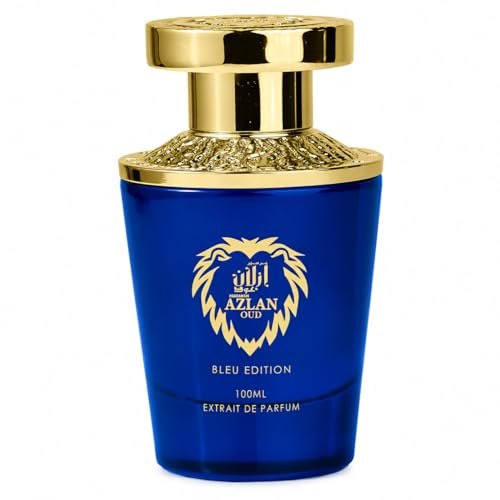
Azlan Oud Bleu EditionThe Scent File Pick
Spot-on · Community-tested (20 mentions)
Twenty reviewers who know Sauvage Elixir compare the two: fourteen find it ninety percent or closer, two say same headspace but not the same, and four say it is not close. It is very strong and long lasting, ten hours and more.
An owner’s words: “This is 90% the same as sauvage elixir, but the spices are turned up a bit.”
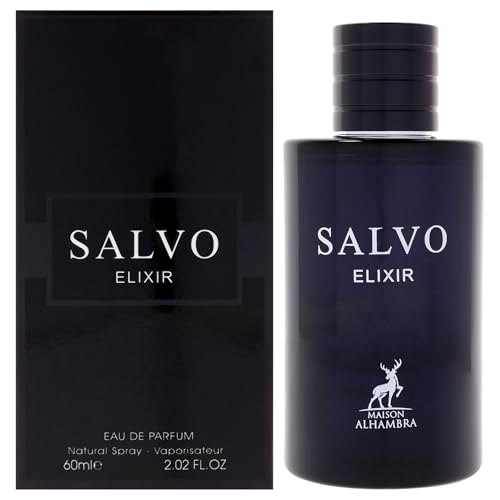
About twenty reviewers who know Sauvage Elixir compare the two: most find it spot on or ninety percent and more, a third say similar but less rich, and one finds the quality far below. Wear time is its weak point for most, one to six hours, though a few get eight or more.
An owner’s words: “The only difference I notice in smell is that Dior Sauvage Elixir has more of a deeper woody licorice to it immediately when sprayed.”

Three reviewers who know Sauvage Elixir compare the two: two find it strikingly accurate and one says similar but not quite there. Nobody reports how long it lasts.
An owner’s words: “The initial smell is astonishingly close to the Dior product, nearly identical.”
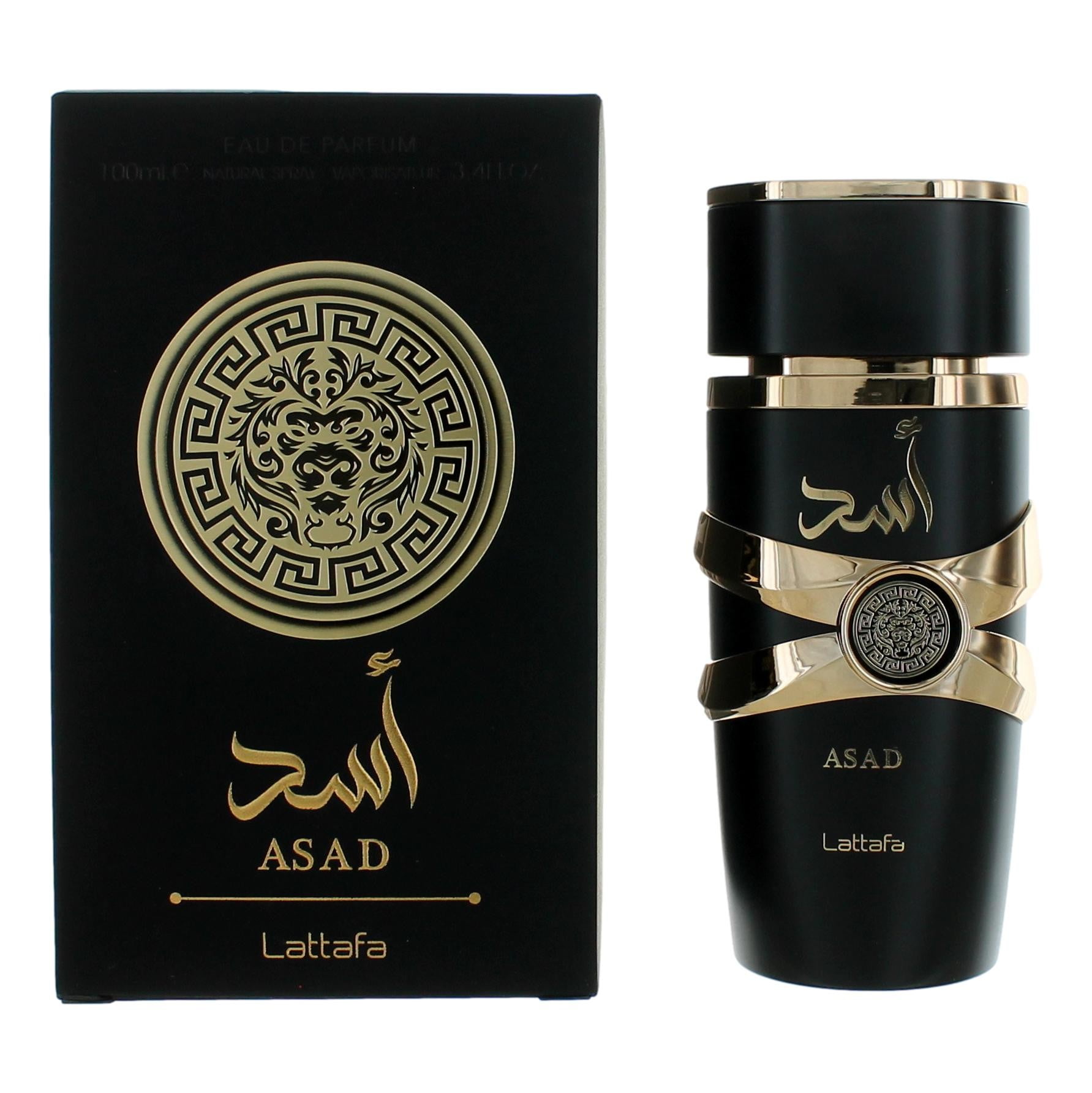
AsadCheapest with a score
Close, with tells · Community-tested (5 mentions)
Smells almost the same as Sauvage Elixir on first sniff; on closer wear Asad is spicier and warmer where Elixir is fresher. Beast-mode longevity.

Recognizable Sauvage Elixir DNA but the vetiver-amber base feels thinner; good for lighter everyday wear.
Is Sauvage Elixir worth $265?
It depends on which Sauvage you already own. If you own the EDT and want an occasional upgrade — a heavier, darker version for cold-weather evenings when you want more presence — the Elixir earns its place in the rotation. The accord is genuinely different from the lighter flankers, not just "more of the same," and $265 for a signature cold-weather fragrance is defensible against comparable niche options.
If you're coming to Sauvage Elixir without prior familiarity with the line, a dupe is a legitimate first step: it costs less than most decants of the original, and it tells you whether the accord works on your skin or in your wardrobe before you spend $265 to find out.
The honest trade-off at $265 is raw-material quality. Sauvage Elixir's sandalwood character reads differently than the synthetic sandalwood substitutes in the dupes — creamier, more dimensional, with a slow-developing quality that the dupes' faster-building amiris approximations don't quite capture. Vetiver is the other gap: real vetiver (particularly Haiti or Bourbon varieties) has a complex grassiness and smoke that synthetic vetiver acetate mimics but doesn't reproduce. By hour four, when the synthetic alternatives have flattened to a simpler amber-musk, the Elixir is still doing something interesting on skin. If the dry-down is where you spend your time evaluating a fragrance, the original is still worth it.
Sauvage Elixir vs Sauvage EDP vs Sauvage EDT — which one should you buy?
The Sauvage line has grown into three distinct fragrances that share a name and brand identity but wear very differently:
Sauvage EDT ($142) is the bestseller and the most broadly applicable. Clean, ozonic, bergamot-pepper-ambroxan, designed for year-round wear and office environments. François Demachy's deliberate nod to Fahrenheit's heritage and fresh masculinity. This is the fragrance most people mean when they say "Sauvage."
Sauvage EDP ($173) keeps the bergamot-pepper structure but adds a rose-lavender heart that softens the opening and extends the projection differently. Slightly warmer and more rounded than the EDT, still broadly wearable. See the full dupe comparison in the Dior Sauvage EDP dupe guide.
Sauvage Elixir ($265) is the concentration jump and character jump simultaneously. This is not the Sauvage you wear to work on a Tuesday — it's the one you reach for on a cold Friday evening when you want to make a statement. The grapefruit opener burns off in minutes and hands the fragrance to spice, amber, and vetiver for the next several hours.
If you're new to the Sauvage line, start with the EDT. It's the most versatile and the most widely sampled, which means decants are easy to find and the community evidence on dupes is deep. If you already own the EDT and want a seasonal companion for cold weather, the Elixir is the natural escalation — more than the EDP, which stays in similar register to the EDT.
Sauvage Elixir dupe vs clone vs alternative — same thing?
Mostly yes. The fragrance community uses these words almost interchangeably, with mild conventions worth knowing:
- Sauvage Elixir dupe is the most common search term and the broadest label — any cheaper fragrance that smells close enough to stand in for the original. No formula-matching is implied.
- Sauvage Elixir clone is sometimes reserved for bottles built to reproduce the accord as closely as possible, rather than land in the same family.
- Sauvage Elixir alternative is the broadest framing — something you'd reach for in the same situations, even if the smell diverges.
- Sauvage Elixir replica is usually marketing language from dupe houses. Check the score and what it rests on before buying anything labelled this way.
For a purchase decision the label doesn't matter. What matters is the accuracy score, the longevity score, and how much evidence sits behind each one.
What you give up with a dupe
The quality gap between the Elixir's dupes and the original is smaller than average for a $265 fragrance — which is worth stating directly, because it's the most useful thing to know before deciding where to spend.
The better dupes reproduce the spice-amber-vetiver core convincingly. What they lose is vetiver complexity: synthetic vetiver reads flatter and loses its grassiness earlier in the wear cycle. By hour four, the dupe is on a simpler amber-musk while the Elixir is still showing vetiver character. If you're a vetiver person — if you know what to listen for in the base — you'll notice. If you're not, you won't.
The sandalwood gap is similar. Real Mysore-adjacent sandalwood has a milky, almost animalic creaminess that cheap sandalwood substitutes don't reach. On the dupes, the sandalwood reads as warm and woody, which is correct directionally. On the Elixir, it reads as warm and slightly edible. In a blind test, you might not flag it. In a side-by-side test, you would.
What you don't give up: projection in the first hour, the overall accord direction, or the cold-weather-evening character.
The quality argument for the original Elixir is a dry-down argument. If you evaluate a fragrance by its first two hours, the dupes have largely closed the gap. If you evaluate by what's on your skin at hour five, the original still justifies its price.
Frequently asked questions
What does Dior Sauvage Elixir smell like?
Sauvage Elixir opens with a brief grapefruit burst that gives way quickly to a dense core of cinnamon and cardamom — loud, assertive, slightly medicinal. The base is sandalwood, amber, and vetiver: warm, resinous, and persistent. Projection is aggressive in the first hour, settling into a close-skin halo by hour three that lasts well into the evening. Best worn in fall and winter.
What is the closest dupe for Dior Sauvage Elixir?
The best Dior Sauvage Elixir dupe we've scored is Al Haramain Azlan Oud Bleu Edition: rated "Spot-on" at 8/10 accuracy and 9/10 longevity (Community-tested, 20 mentions), about $56–$94 versus $265 (100ml) for the original. We list 5 Dior Sauvage Elixir dupes; all of them have a score. Accuracy and longevity are scored separately and never averaged.
How is Sauvage Elixir different from Sauvage EDP?
Sauvage EDP keeps the bergamot-pepper-lavender structure of the original Sauvage line and adds warmth via rose and geranium. The Elixir abandons that fresh-aromatic character almost entirely in favor of a spice-amber-vetiver concentration. The EDP is broadly wearable year-round; the Elixir is a cold-weather statement fragrance that smells like a different fragrance entirely. See the full EDP dupe comparison for more detail.
Is Dior Sauvage Elixir worth the price?
If you already own a lighter Sauvage and want a cold-weather escalation, yes — the Elixir's sandalwood and vetiver quality in the dry-down past hour three is meaningfully above the dupes. If you're new to the accord or uncertain whether you'll wear it regularly, test a dupe first: it costs less than most decants of the original.
How long does Dior Sauvage Elixir last on skin?
On most skin types, Sauvage Elixir projects for 2–3 hours before settling into a close-skin sillage that persists for 6–8 hours total.
Can I wear Sauvage Elixir to work?
Most people shouldn't. Projection in the first 90 minutes is aggressive enough to dominate a shared office or meeting room.
Verdict
- Closest match: Al Haramain Azlan Oud Bleu Edition ($56–$94) — 8/10 accuracy, Community-tested (20 mentions).
- Cheapest with a score: Lattafa Asad ($25–$40) — 7/10 accuracy, Community-tested (5 mentions).
- The original: Dior Sauvage Elixir is $265 (100ml). Every score, its evidence and where to buy are on that page.
