Blooming Bouquet EDT vs J'Adore
Side by side. Scored honestly.
← Compare different fragrances
Side by side
Comparing the originals — price, breadth, listed-note depth.
Opens with a bright, airy peony that leans pink and slightly candied, softened quickly by magnolia and a whisper of jasmine. The heart is unabashedly feminine and powdery — not dusty or heavy, just clean and smooth. The dry-down settles into white wood and a faint patchouli that adds barely-there depth without going earthy, anchored by a sheer musk. Projection stays close to skin; sillage is polite, almost intimate. Uncomplicated and wearable to the point of invisibility — best for warm-weather days and anyone who wants to smell quietly, effortlessly pretty.
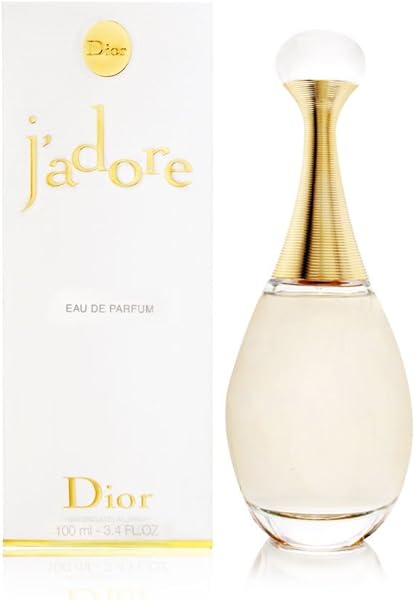
Opens with a bright bergamot cut through ripe peach and pear — juicy but not cloying, gone within twenty minutes. The heart is where it earns its reputation: magnolia, tuberose, and ylang-ylang stack into a full, creamy white floral that reads confident without being loud. Sillage is moderate and well-behaved. The dry-down softens onto warm sandalwood and clean musk, losing most of the fruit and settling into something polished and skin-close — Best worn in spring or fall, for someone who wants a classic, grown-up femininity without effort.
How they overlap
Blooming Bouquet EDT and J'Adore share 2 notes (magnolia, musk). The same note name doesn't always mean the same scent — different houses use different vanillas, different woods, different musks — but a multi-note shared spine usually does indicate genuinely-comparable wear character. The remaining notes (4 unique to Blooming Bouquet EDT, 6 unique to J'Adore) are where the divergence happens.
The buying decision
J'Adore is the cheaper original at $105 compared to $110 for Blooming Bouquet EDT — about 5% less.