Eau Rose EDT vs Eau Rose
Side by side. Scored honestly.
← Compare different fragrances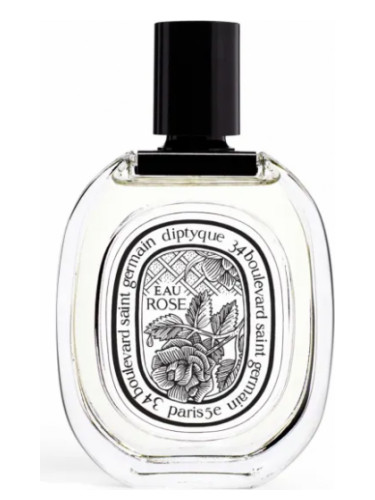

Side by side
Comparing the originals — price, breadth, listed-note depth.
Diptyque's 2012 Eau de Toilette ode to rose — distinct from the 2022 EDP reformulation (which is darker and longer-wearing). The EDT is fresh-springy: litchi, black currant, and bergamot open with bright fruit before two roses (Centifolia and Damascena) settle into the heart alongside geranium and jasmine. The base is light — musk, Virginia cedar, and white honey rather than the patchouli-heavy bases of more recent rose releases. Transparent, green, slightly fruity. Reads as daytime spring/summer wear rather than evening or winter.
Opens with a juicy, slightly watery lychee that keeps the rose from going full-on florist — the two notes read almost simultaneously, giving the opening a soft, translucent fruit-and-petal quality rather than anything green or sharp. The heart settles into a clean, dewy rose that stays convincingly natural without turning powdery. Projection is modest from the start; this wears close to the skin and doesn't announce itself. The dry-down is a barely-there white musk that extends the rose quietly for a few hours before fading entirely — ideal for warm-weather days when you want scent presence without weight, especially for anyone who finds most roses too heavy or too sweet.
How they overlap
Eau Rose EDT and Eau Rose share 3 notes (rose, musk, litchi). The same note name doesn't always mean the same scent — different houses use different vanillas, different woods, different musks — but a multi-note shared spine usually does indicate genuinely-comparable wear character. The remaining notes (6 unique to Eau Rose EDT, 3 unique to Eau Rose) are where the divergence happens.
The buying decision
Eau Rose EDT is the cheaper original at $129 compared to $185 for Eau Rose — about 30% less. Both wear best across the same spring/summer — they're interchangeable on weather fit.