L'Eau d'Issey vs Baccarat Rouge 540
Side by side. Scored honestly.
← Compare different fragrances
Side by side
Comparing the originals — price, breadth, listed-note depth.
Opens with a sharp, almost electric aquatic blast — clean water meeting melon and freesia with surprising crispness. The heart softens into a sheer floral blend of rose, peony, and lotus that feels more like the idea of flowers than a bouquet, light and translucent rather than heady. The dry-down settles into a barely-there sandalwood and musk base with restrained sillage, staying close to skin by afternoon. Projection is modest throughout — this is a fragrance that suggests rather than announces — Best in warm weather on someone who wants clean and inoffensive over complex or bold.
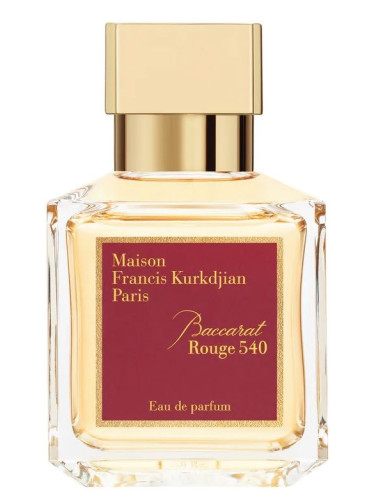
Saffron opens sharp and slightly medicinal, then almost immediately dissolves into a warm, luminous blur of jasmine and amberwood — the signature move that made this famous. The heart is less floral than it sounds; the jasmine reads more as a sweetened airiness than a recognizable bloom. Dry-down is where it lives: cedar and fir resin ground a soft, skin-close amber that radiates rather than announces itself, with sillage that lingers in a room long after you've left — Fall and winter wearing, for anyone who wants to smell expensive without being loud about it.
How they overlap
L'Eau d'Issey and Baccarat Rouge 540 share no notes in common — these two fragrances target very different olfactory territory, and the comparison is a question of which direction you want to go rather than which version of the same accord.
The buying decision
L'Eau d'Issey is the cheaper original at $95 compared to $325 for Baccarat Rouge 540 — about 71% less. L'Eau d'Issey is built for spring/summer; Baccarat Rouge 540 for fall/winter. Pick by when you'd actually wear it.
Recommendation
If you're price-sensitive, L'Eau d'Issey delivers comparable territory at $230 less than Baccarat Rouge 540. If you want the specific character of Baccarat Rouge 540 — the prose above is the better guide than the price — the premium is what you're paying for.