L'Air du Temps vs Baccarat Rouge 540
Side by side. Scored honestly.
← Compare different fragrances
L'Air du Temps
Side by side
Comparing the originals — price, breadth, listed-note depth.
Opens with a spiced carnation that's slightly sharp and dry, grounded quickly by iris powder that pulls everything cool and a little austere. The heart softens into rose and jasmine without going lush — it stays restrained, almost translucent, with the carnation threading through. Dry-down is sandalwood and musk with a warm benzyl salicylate smoothness, faintly soapy and skin-close. Projection is modest; sillage is a quiet trail rather than a statement. A fragrance built on elegant tension between spice and powder — best worn in spring or fall by anyone who prefers classic femininity over sweetness.
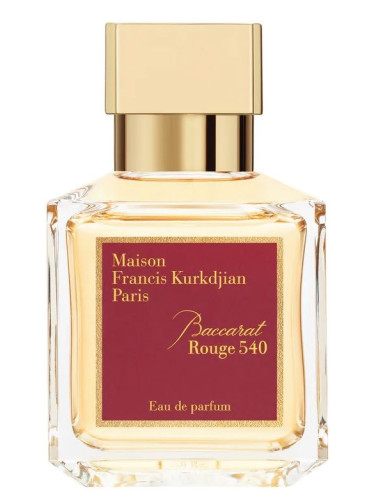
Saffron opens sharp and slightly medicinal, then almost immediately dissolves into a warm, luminous blur of jasmine and amberwood — the signature move that made this famous. The heart is less floral than it sounds; the jasmine reads more as a sweetened airiness than a recognizable bloom. Dry-down is where it lives: cedar and fir resin ground a soft, skin-close amber that radiates rather than announces itself, with sillage that lingers in a room long after you've left — Fall and winter wearing, for anyone who wants to smell expensive without being loud about it.
How they overlap
L'Air du Temps and Baccarat Rouge 540 share exactly one note (jasmine). The overlap is real but narrow — most of the wear experience will diverge.
The buying decision
L'Air du Temps is the cheaper original at $85 compared to $325 for Baccarat Rouge 540 — about 74% less. L'Air du Temps is built for spring/fall; Baccarat Rouge 540 for fall/winter. Pick by when you'd actually wear it.
Recommendation
If you're price-sensitive, L'Air du Temps delivers comparable territory at $240 less than Baccarat Rouge 540. If you want the specific character of Baccarat Rouge 540 — the prose above is the better guide than the price — the premium is what you're paying for.