Guimauve vs Kirke
Side by side. Scored honestly.
← Compare different fragrances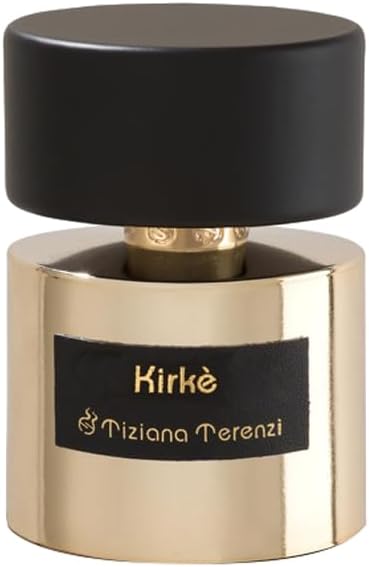
Side by side
Comparing the originals — price, breadth, listed-note depth.
Opens with pillowy marshmallow and heliotrope — powdery, almost edible, closer to confectionery than perfume. The heart deepens as vanilla and praline push forward, rich but never cloying, held in check by tonka bean's slight bitterness. Sandalwood and benzoin anchor the dry-down into something genuinely woody and warm rather than flat dessert mush, with a soft musk sillage that lingers close to skin. Projection is moderate and intimate rather than room-filling — a cozy, well-behaved gourmand. — Best in autumn and winter, ideal for anyone who wants to smell like a high-end patisserie without crossing into birthday cake territory.
Ripe peach and passion fruit open loud and almost edible, leaning more tropical smoothie than refined floral for the first twenty minutes. As the heart develops, tuberose and jasmine push through with a creamy, slightly indolic weight that keeps it from reading too sweet. The dry-down is where it earns its price — sandalwood, amber, and vanilla pull everything into a warm, resinous base with real depth and staying power. Sillage is generous without being aggressive, and the amber warmth in the base is notably richer than budget alternatives can replicate — best worn in warm weather by anyone who wants their skin to smell expensive and unapologetically sensual.
How they overlap
Guimauve and Kirke share 3 notes (sandalwood, musk, vanilla). The same note name doesn't always mean the same scent — different houses use different vanillas, different woods, different musks — but a multi-note shared spine usually does indicate genuinely-comparable wear character. The remaining notes (5 unique to Guimauve, 5 unique to Kirke) are where the divergence happens.
The buying decision
Original-bottle pricing is essentially identical ($295 vs $295), so the choice rarely comes down to upfront cost.