Amber Aoud vs Aoud
Side by side. Scored honestly.
← Compare different fragrances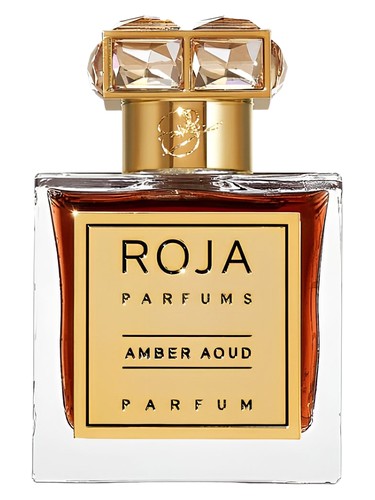
Side by side
Comparing the originals — price, breadth, listed-note depth.
Bergamot lifts the opening with brief brightness before amber and rose take over completely — rich, powdery, and unapologetically lush. The heart is dense: rose woven through a resinous oud that reads more sweet than smoky, anchored by warm sandalwood and earthy patchouli. Vanilla and musk deepen the dry-down into something almost edible, a soft gourmand skin-close finish. Projection is bold in the first hours, then pulls inward to a long, intimate sillage that lingers for hours — ideal for cold-weather evenings when you want to be noticed before you enter a room.
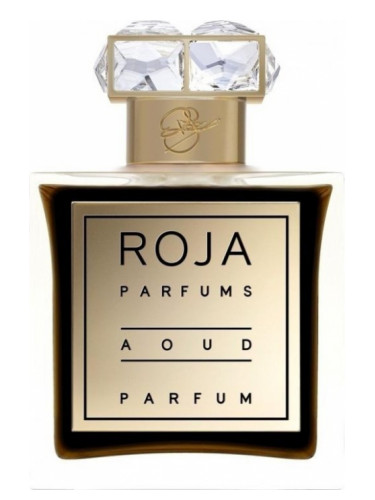
Opens with a dense, almost medicinal saffron-stained rose — vivid and slightly animalic before the oud anchors everything into dark, resinous territory. The heart is where it earns its price: rose and oud locked together in a smoky, leathery embrace that reads as genuinely opulent rather than synthetic. The dry-down softens through sandalwood and amber into a warm, skin-close finish with long-lasting sillage that still announces itself hours in — projection is bold for the first two to three hours, then intimate. — Cold-weather evenings, formal occasions, anyone who wears fragrance as a statement rather than an afterthought.
How they overlap
Amber Aoud and Aoud share 3 notes (rose, sandalwood, amber). The same note name doesn't always mean the same scent — different houses use different vanillas, different woods, different musks — but a multi-note shared spine usually does indicate genuinely-comparable wear character. The remaining notes (5 unique to Amber Aoud, 3 unique to Aoud) are where the divergence happens.
The buying decision
Aoud is the cheaper original at $560 compared to $595 for Amber Aoud — about 6% less. Both wear best across the same fall/winter — they're interchangeable on weather fit.